

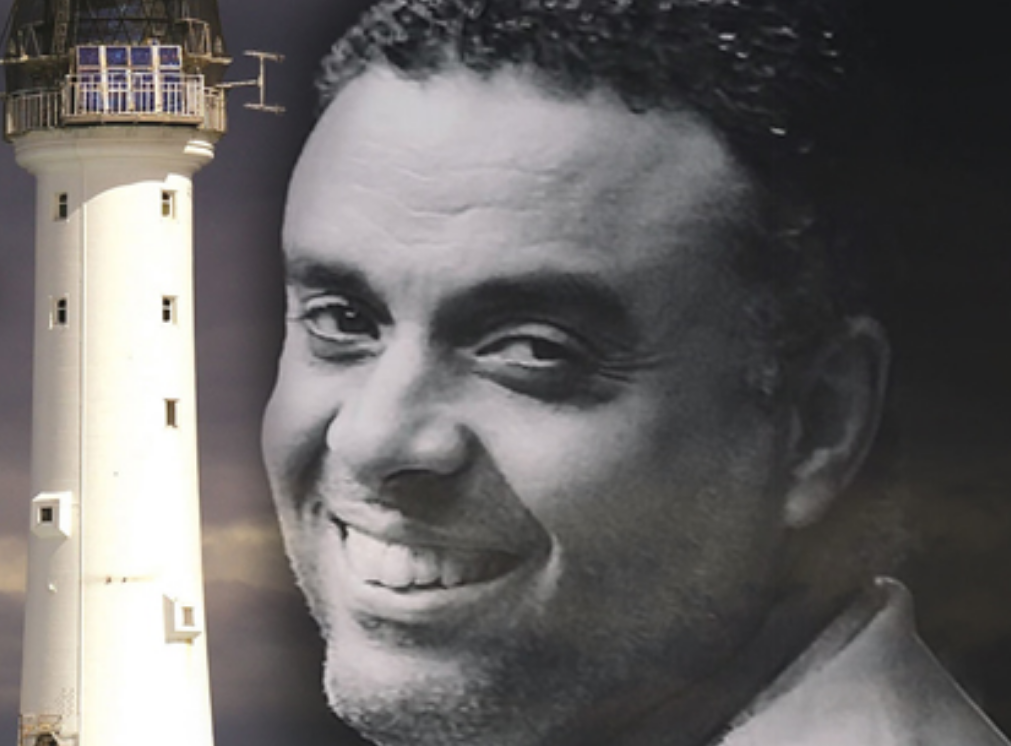

A former bishop of Lighthouse Chapel International, Larry Odonkor, is uneasy about his birthday, which falls on July 9.

He will turn 45, but the fear of growing old in itself is not his headache as he marks four and a half decades of his life.
Forty-five is a number that forces him to take his life and those of his dependents into account.
Has he achieved his purpose? Has he put his children on the path of success? Has he saved enough for his future? Has he prepared for pension?

Pension is a painful word for the bishop. Some 15 years to his retirement, he is living with the heartache that Lighthouse Chapel International did not pay his mandatory pension contribution for a cumulative 14 years.
But, like a Liverpool FC fan, Bishop Odonkor does not walk alone in this regard.
Five of his colleagues in the ministry — a bishop, three reverend ministers, and a pastor— hadn’t had their Social Security and National Insurance Trust (SSNIT) contributions in full.
Some did not have even a single month of their SSNIT contributions paid at all.
Together, these six ministers of God laboured for a cumulative 42 years and five months without the payment of their pension contributions, which employers are mandated by law to pay on behalf of their employees.
They worked in Lighthouse but their future, life after retirement, is dark, they say.
They say they were drawn into the ministry by their spiritual father, founder and Presiding Bishop of the church they served, Dag Heward-Mills.
Most of them, who served as student-leaders in the gospel, say they were not given employment letters. There was no formal employer-employee relationship when they transitioned into full-time service of the Lord after graduation.
The six have resigned from the church for various reasons and dragged the Lighthouse Chapel International, which used to be the epicentre of their spiritual and social lives, to court.
They are praying the court to compel the church to pay their SSNIT contributions as well as other rights they say the church violated since they went into ministry there, some immediately after leaving the university.
They believe there are more silent victims among the 111 bishops and over 2,300 pastors of Lighthouse who are currently shepherding more than 6,070 churches in 92 countries across the world. Apart from enforcing their rights, they say the reason they are speaking up is to ensure that those still serving in the church do not suffer what they have been through.

L-R: Larry Odonkor, Emmanuel Oko Mensah, Edem Kofi Amankwa, Seth Sarpong Duncan, Edward Laryea, and Faith Fiakojo. They have resigned from Lighthouse and have sued the church for violating their rights.
The Fourth Estate delves into the lives of these six ministers of God and what they say is a culture of abuse, exploitation, and pressure on some pastors to divorce their wives, all in the name of advancing the work of God. To them, there is some darkness in the Lighthouse Chapel International, which is now called the United Denominations Originating from the Lighthouse Group of Churches (UD-OLGC).
In the first of this series, we focus on allegations by the pastors about the total or partial non-payment of their pension contributions by their employer.
Alleged Non-payment of SSNIT Contribution
In December 2001, Larry Odonkor laid down his BSc. Biological Science degree awarded him at the Kwame Nkrumah University of Science and Technology (KNUST) and picked up a new cross –- full-time ministry with Lighthouse Chapel International. He graduated in July 2001, at age 25.
For the next 19 years of his life, the vibrant graduate would open branches of the church in several African countries such as Ethiopia, Central Africa Republic, South Africa, and Madagascar. In Ghana, he laboured in the Lord’s vineyard in Akim Oda, Suhum, Wa, and in Accra.
“And I heard God say to me on 6th March 2020, that ‘if you don’t leave, you will not fulfil your ministry,’” he recounts the turning point in his life, the decision to turn his back on the church which had defined him.
He resigned in April 2020.
While thinking about his future after the resignation, he learned of a shocking past. Only five years of pension contributions had been paid. Some 14 years of active service had vanished off the radar of his pension contributions.

“I was disappointed. I felt used because this is basic. So, while my wife and I were going around planting churches, something as basic as SSNIT was not even paid,” he shakes his head.
Bishop Emmanuel Oko Mensah did not travel around as much as Larry Odonkor. He completed the Kwame Nkrumah University of Science and Technology (KNUST) in July 2001 with a degree in Civil Engineering.
He did his compulsory national service with the Roads Department of the Accra Metropolitan Authority (AMA) and said he yielded to “pressure” from Bishop Dag Heward-Mills to join the full-time ministry, which he did in December 2002.
He was stationed at The Qodesh, the headquarters of the church, which is painted black and white, starkly contrasting colours like a depiction of right and wrong. Some things went right for him as his ministry won souls and mobilised resources to expand the church.
But some things were going wrong for him, he recounts his journey with Lighthouse and his spiritual father to The Fourth Estate.
He was posted to Cotonou in Benin and later Ouagadougou in Burkina Faso, all brief spells on the mission field. But in 2019, he learned that seven months of his SSNIT had not been paid.
It was his wife who made that discovery. She works at SSNIT and had heard harrowing tales of the painful lives of pensionless workers. Her husband would not be one of them, she believed. But she verified.
Some crisp clicking of her computer mouse, her husband’s financial future on a spreadsheet popped up before her. That was where she detected that this future had seven figures missing. She figured it must have been an oversight on the part of the church administration.
So, the wife of the bishop, who was also a member of the church, called administrators to draw their attention to the “error”. She got a severe reprimand, Bishop Oko Mensah says. And he got his own, too.
“I received a call from the Senior Associate Minister, rebuking me and blasting me, telling me that my wife was way out of order for asking questions about my SSNIT contributions. He told me that what my wife did was wrong and so I should rebuke her,” he recalls the reaction.
In another recurring story of alleged negligence, Rev. Edward Laryea also says his SSNIT was not paid for three years. Rev. Laryea, a University of Cape Coast (UCC) graduate in Chemistry completed his programme in July 2005 and joined the full-time ministry at Lighthouse in December that same year.
MORE:
He got to know about this while he was stationed at Kade in the Eastern Region in 2008. The Church had introduced a new policy that would change his life in many ways.
It was called “Become Who You Can Become.” It basically meant that the mother church was not going to support missions that were more than two years old. They now had to raise money from the mission field in order to pay themselves and build churches.
And so, Rev. Edward Laryea, who was in his early twenties, visited the SSNIT office at Kade to find out the status of his pension contributions.
“They told me that ‘Lighthouse has not been paying anything for you.’”
He was already three years into full-time ministry. Edward Laryea said he began the payment of his own SSNIT when he headed the church in Kade.
“I believe that if I had not started payment, I would be here telling you that not even one cedi was paid for me [after 12 years].”

He resigned in 2017 after 12 years of “labouring” with his wife in Kade and Takoradi on a salary of GHS 800 a month.
Three other Ministers–Seth Duncan, Edem Kofi Amankwah, and Faith Makafui Fiakodzo–were also victims of this pattern of alleged non-payment of pension contribution by the church.
Seth Duncan, a former seaman of the Ghana Navy, went into full-time ministry in 2008 but resigned after 10 years. After completing senior high school in 2002, he joined the Ghana Navy that same year, but resigned in 2005, He attended the bible college of Lighthouse for three years before becoming a full-time minister of the gospel in 2008.
He says he planted churches in Paga, Tamale, and Kasoa. But his SSNIT was paid for only two months.
Rev. Edem Kofi Amankwah obtained a Bsc. Actuarial Science degree from UCC and went into full-time ministry in November 2007 after graduating in May that same year. But he resigned in 2016 after serving in Liberia and Nigeria. His SSNIT for the entire duration of his ministry-9 years was not paid.
Pastor Faith Makafui Fiakodzo graduated from the church’s Bible School-Anagkazo and went into full-time ministry in 2013. For three years, he was not paid any salary. And when he did receive any payment, it was GHS 300 a month.
Response Sought from Lighthouse
On March 17, 2021, The Fourth Estate wrote to the United Denominations of Lighthouse Group of Churches for a response to the alleged default in the payment of SSNIT contribution and other issues raised by the named pastors.
At the time of filing this report, the church had not responded to the letter. (Sources close to the management of the church told The Fourth Estate that the church would not respond to the request for comment, but the church is yet to communicate that.)
However, concerning the payment of SSNIT for Larry Odonkor, there is a letter from the church explaining it does not owe the former bishop any payment of outstanding SSNIT contributions.
This letter from the church is dated September 29,