


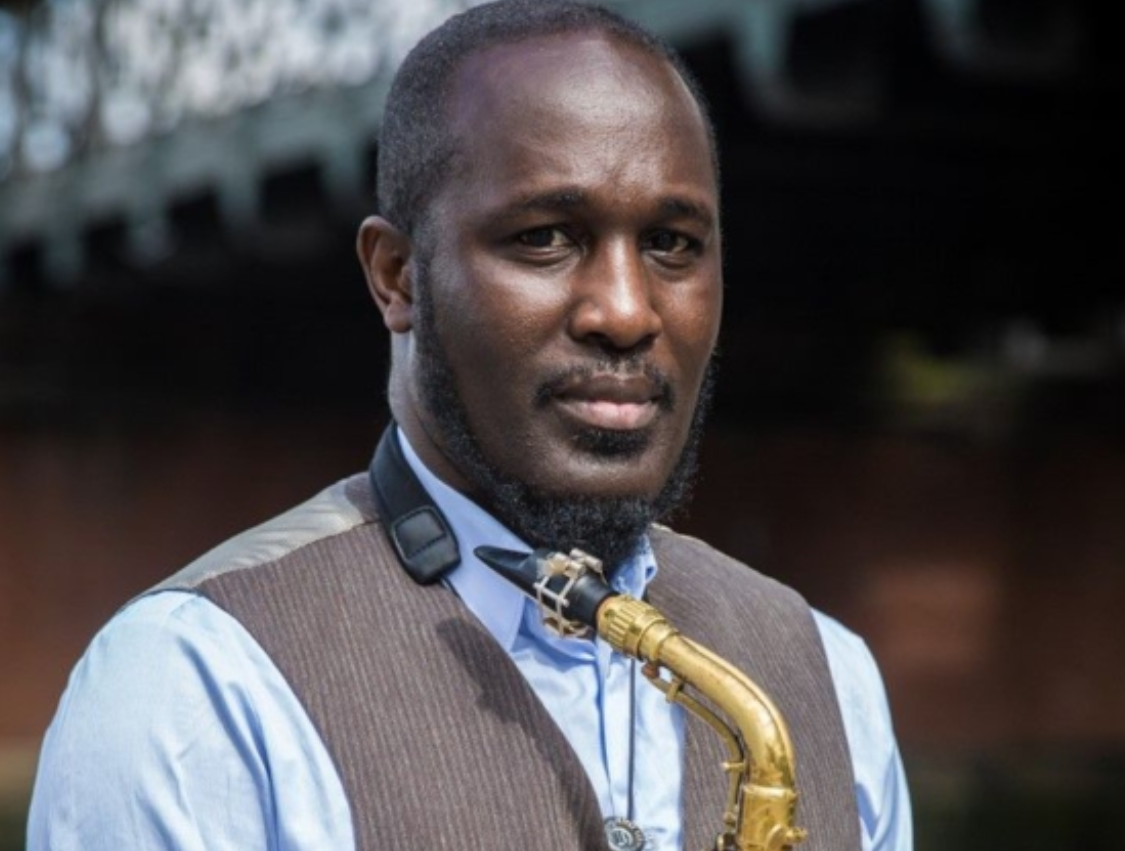


When Tony Kofi was 16 years old, he had an accident at work. As he fell from a great height, he had a vision of himself playing a musical instrument, despite never having learned to do so. The experience set him on a new path in life – and led to him becoming a highly-acclaimed saxophonist.

Three storeys high, Tony noticed what a beautiful day it was. The sky was clear and peaceful. “I was so happy,” recalls Tony.
It was spring 1981 and 16-year-old Tony Kofi was working as a carpentry apprentice, helping to replace the old roof of a house.
He was so keen to impress that he’d asked his supervisor if he could carry on working while his boss had lunch. The supervisor had warned him to be careful.
He was sawing a two-by-four length of wood. “I didn’t see it properly, it splintered,” Tony recalls.
“It caught my sleeve and took me down.”
Tony started to fall.
His first thought was that he could not possibly survive. And so, he says, he just completely relaxed, let go and closed his eyes.
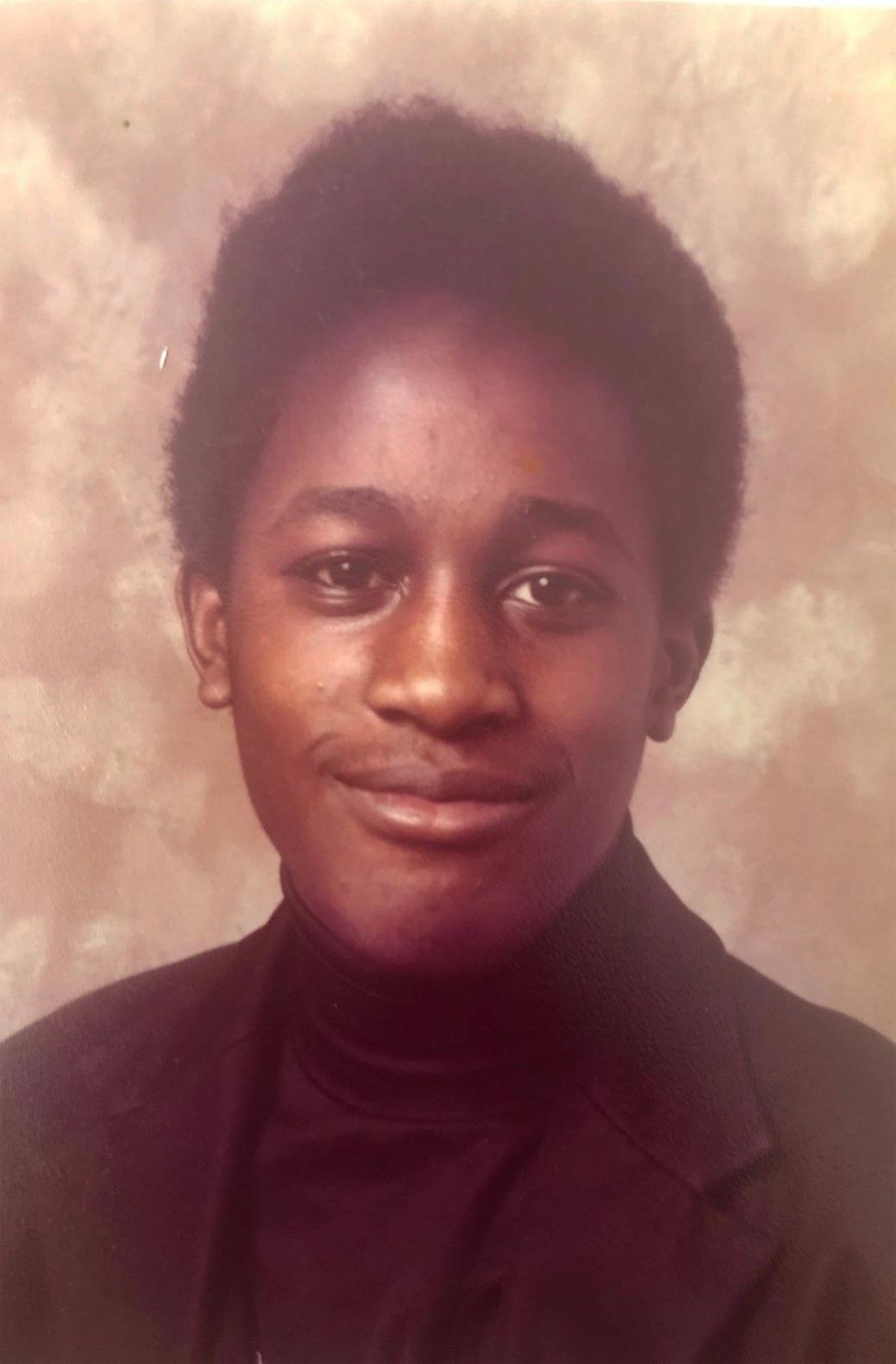
“I don’t know whether it’s adrenaline or what – because I’ve read about this, that when you fall from a great height, everything slows down,” he says. “I just started seeing flashes of images. It was unbelievable.”
In his visions, Tony saw different places around the world and the faces of people he didn’t recognise.
“I saw young children that I’ve never seen before – that were to become my children, I guess. And the one thing that really stuck in my mind was me standing up and playing an instrument. I just thought, ‘This is the weirdest feeling in my entire life.’
“And then that was it, I completely blacked out.”
Back in the 1960s, in Tony’s childhood home in Nottingham, the silky, smoky tones of jazz artists drifted throughout. Tony’s mother Ama was playing her records.
She and her husband Jack were from Kumasi in southern Ghana and Ama had seen the American jazz singer and trumpeter Louis Armstrong perform in person on his visit to the country in 1956. It had made her fall in love with jazz.
Jack had spent some time in England in his early 20s, pursuing his boxing career, and moved to Nottingham permanently in 1959 to set up home for his family. When Ama and their two boys joined him a year later, she brought a variety of records and the house was filled with syncopated jazz beats.
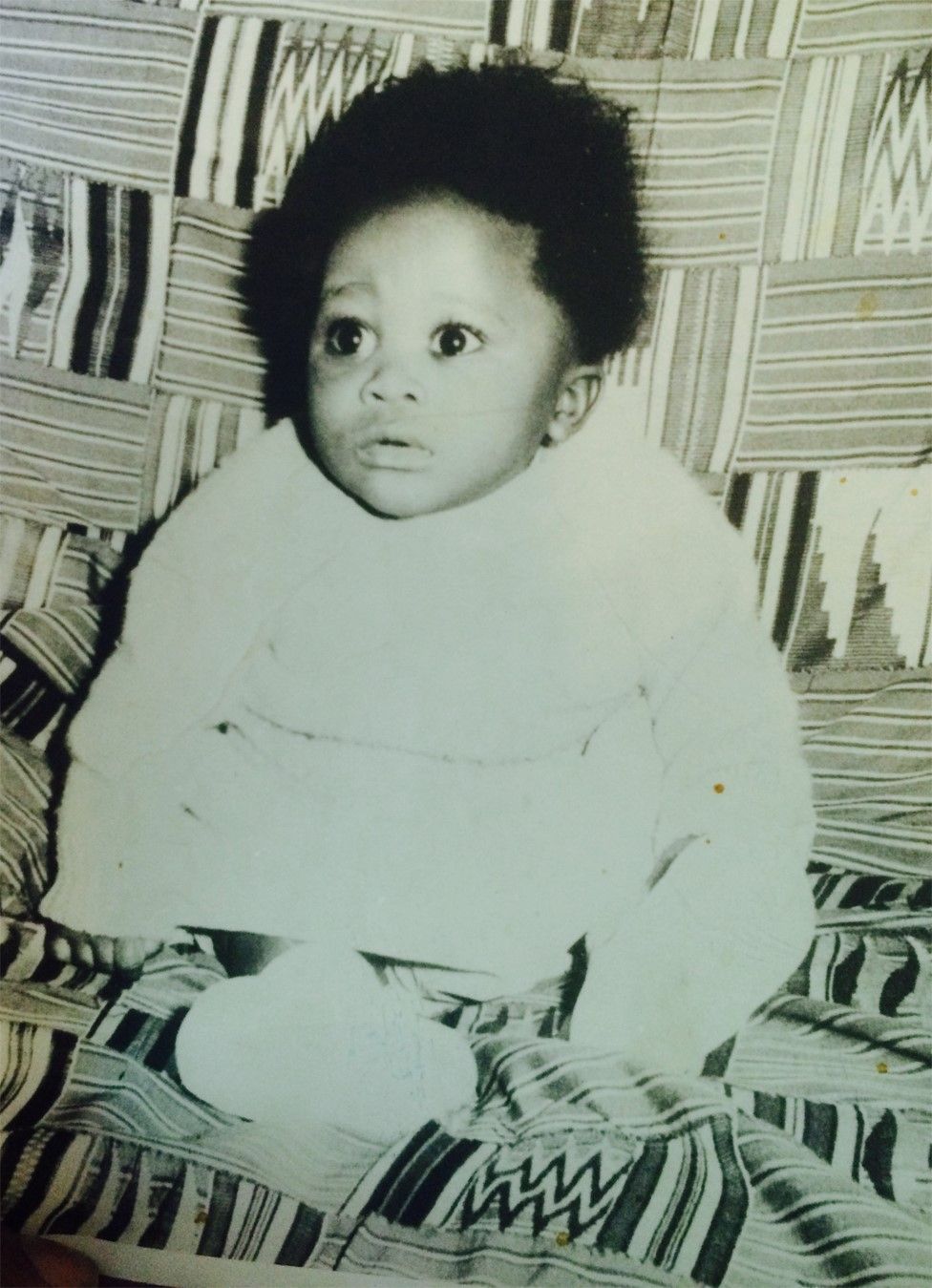
Ama and Jack went on to have seven boys in total and Tony was their fifth child. Born in 1964, his memories of his upbringing are just like Armstrong’s famous song What a Wonderful World, with “skies of blue and clouds of white”.
“As a young child I can barely remember winter,” he says, “because I was having so much fun to ever think of these dark, cold days.”
He describes his childhood as “very traditional”, with Ghanaian food and Ghanaian music. His parents insisted the family speaks Twi, their Ghanaian dialect, at home: “English was for outside.”
But when it came to primary school, Tony was a bit of a “tearaway”.
MORE:
He says: “I was born left-handed, and traditionally in Ghana if you have a left-handed child, they want to make him right-handed. It’s an old tradition, and my parents insisted that I become right-handed.
“The school was informed. They had to make sure that I wasn’t writing with my left, and I think that made me a little disruptive, because I was going against the grain.”
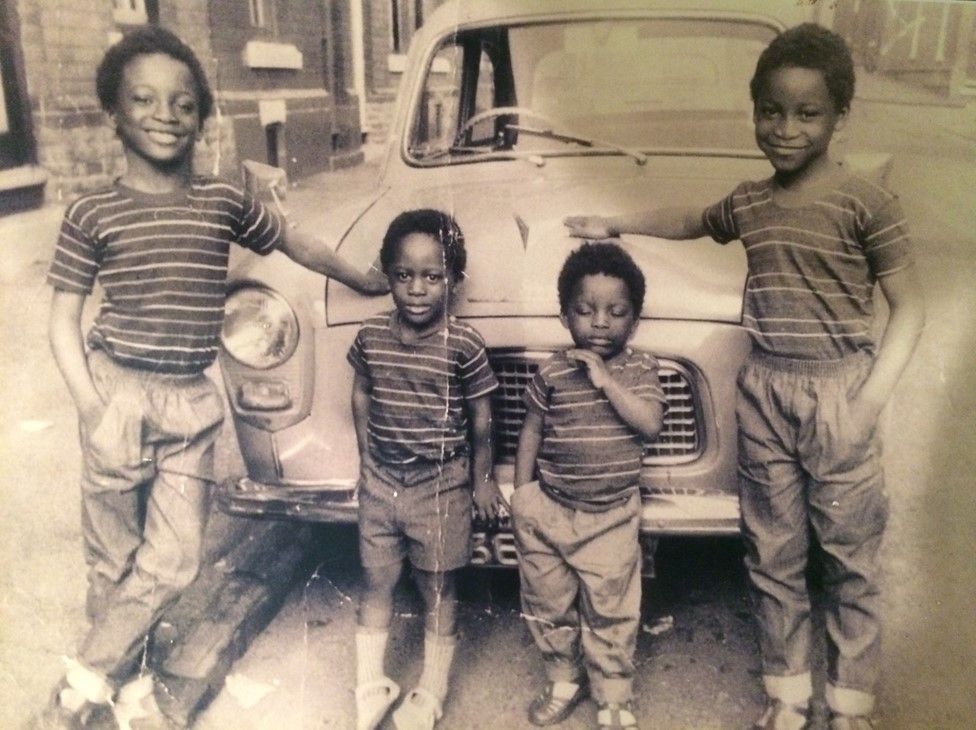
During those early years at school Tony had no interest in anything other than sport, football and playing with his friends. In secondary school he did express a passion for music but was told he wouldn’t be able to study it.
“They gave you little tests and then they picked who was more focused and who was more grounded,” says Tony, “and I wasn’t one of the ones that was chosen.
“I was pretty gutted about that, and then they put me into woodwork, so I just accepted it and that was what I did all through my secondary school.”
Tony was becoming skilled at his craft, and left school in 1980, to start work as a carpentry apprentice, attending college one day a week and learning on the job for the remaining four days. It was on one of these jobs that he had his terrible fall.
After the accident Tony woke up in hospital, with his mother, father and two of his brothers by his bedside, desperately worried and asking how he felt.
“I said, ‘My head really hurts,’ and they said: ‘You gave us a fright, you’ve been out for days.’”
Disorientated, bruised and with severe head trauma, Tony was told that he had hit his head so hard in the fall that he could have died from the impact.
He remembers his work supervisor coming to visit him in hospital.
“He said to me, ‘You just completely hit the bottom on your head like a sack of potatoes.’”
When Tony was well enough to leave hospital three to four weeks later, he returned home to convalesce. He had received some compensation money for the fall and the loss of earnings, and his job was left open for him to return to whenever he was ready.
But the images he’d seen when falling would not go away and kept “flashing back” every time he closed his eyes.
“They really haunted me, because it was almost like I [was] being shown something,” says Tony.
He kept it to himself, but the fall had altered his attitude to life forever.
Having never studied music, Tony began to contemplate spending his compensation money on an instrument.
But what was the instrument he had seen in his visions? He searched through music books and there, on the page, was a description of a shiny woodwind instrument, made of brass and with a conical shape.
That was it – the saxophone.
“I’m not saying that I was musically ignorant back then, but I’d never ever seen a saxophone,” says Tony, “I’d probably heard it on the radio, but was completely oblivious to it.”
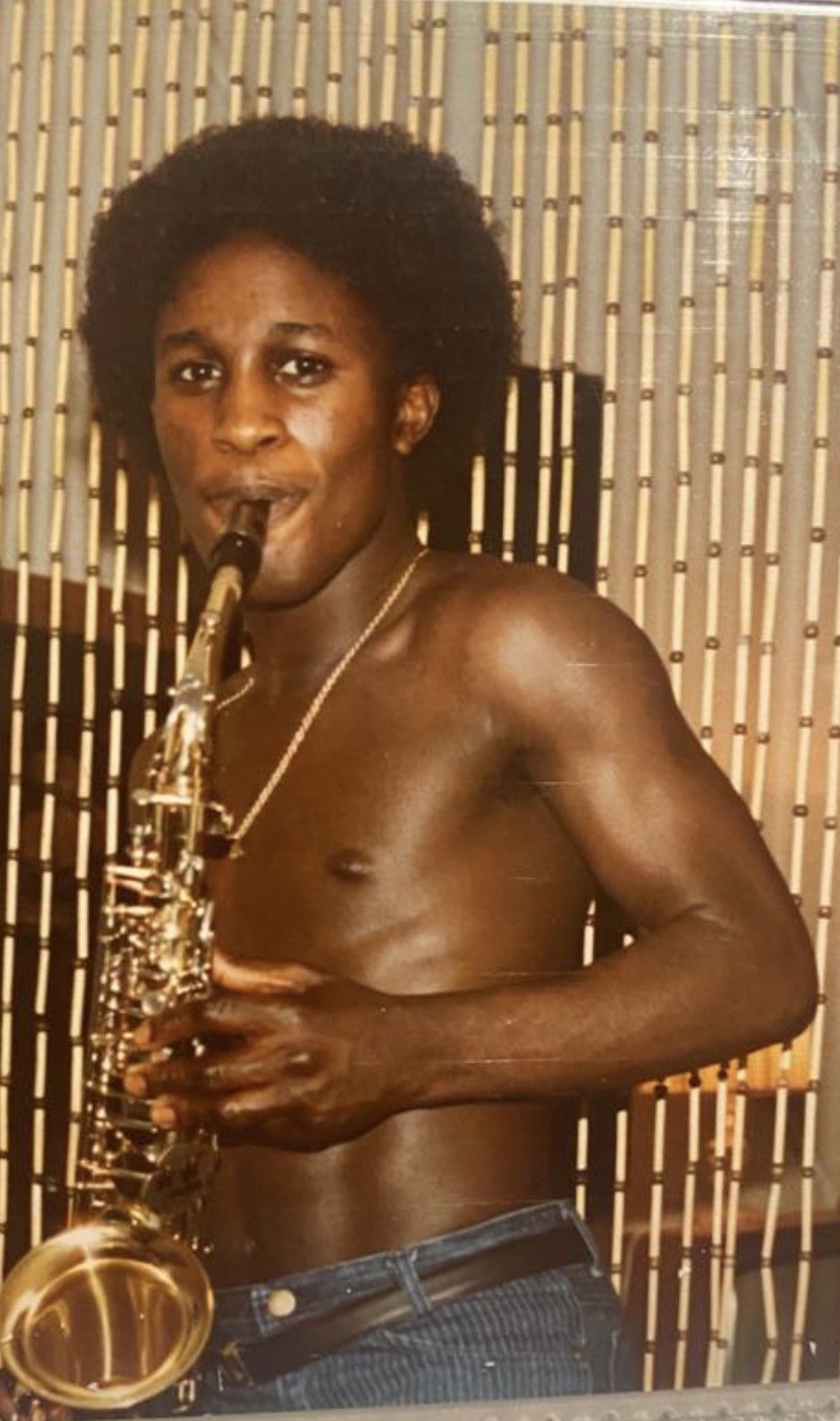
In early 1982 Tony paid £50 for his first saxophone – a lot of money in the 1980s, the equivalent of around £200 today. He walked back into his family home carrying his piece of musical treasure.
His mother looked at him strangely, unaware of what Tony had seen in his vision.
“I said: ‘It’s a saxophone and I’m going to play it, I’m going to learn it,’” says Tony. “I’m going to quit my job.”
Tony remembers his mother putting her hand on her head and asking her husband Jack to speak to their son.
“He’s throwing away a perfectly good trade,” Tony recollects her saying to Jack. “He’s probably scared of what happened in the fall.”
Although his father did try to talk to him, Tony was adamant.
“I said, ‘I can’t go back.’ They [didn’t] understand why, but I said to them, ‘If I go back, then I might as well have died in that fall.’”
Tony couldn’t afford to pay for lessons and his mother and father were not able to spend their “hard-earned money”, says Tony, on music tuition, but his mother offered him something much more precious and valuable instead – vinyl gold.
“She gave me the stacks of records,” says Tony. “She said, ‘Look this is very, very good music, use these records, learn from them,’ and that’s exactly what I did. I recorded them on to a cassette and I put the headphones on and I would constantly listen and try and learn from them and try and play along.”
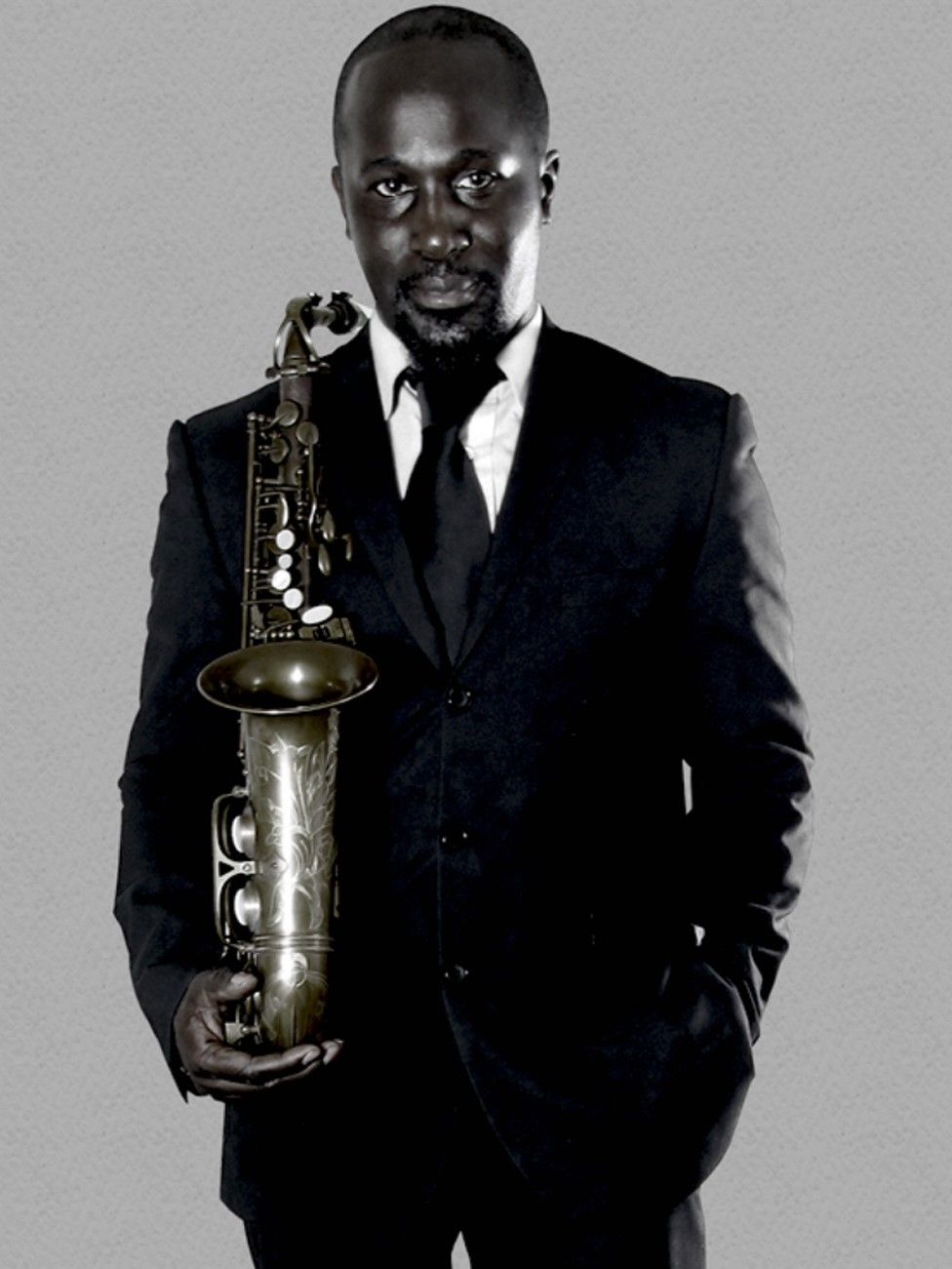
So Tony began to teach himself how to play the saxophone, but his initial attempts did not produce that mellow, sultry tone the saxophone is famous for.
Shriek, screech, squeak.
“Like a five-year-old child trying to play the violin,” says Tony. The sound was excruciating and “painful to the ears”.
His brothers became his “musical barometer”. All of a sudden the door of his bedroom would fly open and a shoe would come hurtling towards him, hitting Tony on the head or back.
But he kept on practising, first for two hours, then five, and then for eight to 10 hours a day.
Over time those flying shoes became much less frequent and his brothers began to stay and sit and listen to Tony play.
One day, when his mother brought up a tray of food to his room, Tony remembers her saying, “I recognise what you’re playing… I love this tune.”
It was a track entitled, Take the “A” Train, from an album by jazz composer and pianist Duke Ellington.
The song is about a train on a New York subway line speeding down the track to the Sugar Hill district of Harlem.
Tony felt like his life was on track, too. “It was a great time to be me,” he says.
Although Tony played the saxophone by ear, he could not read music and wanted to learn more about music theory. Around 1986-1987, he approached a college in Nottingham, renowned for its music and performing arts training, but was told he could not have a place because he hadn’t completed any musical grades or examinations.
“It [was] almost like that rejection again,” he says, “but this time I wasn’t going to take it, because I’d found something that I really, really loved and that I wanted to do, and that rejection just made me stronger.”
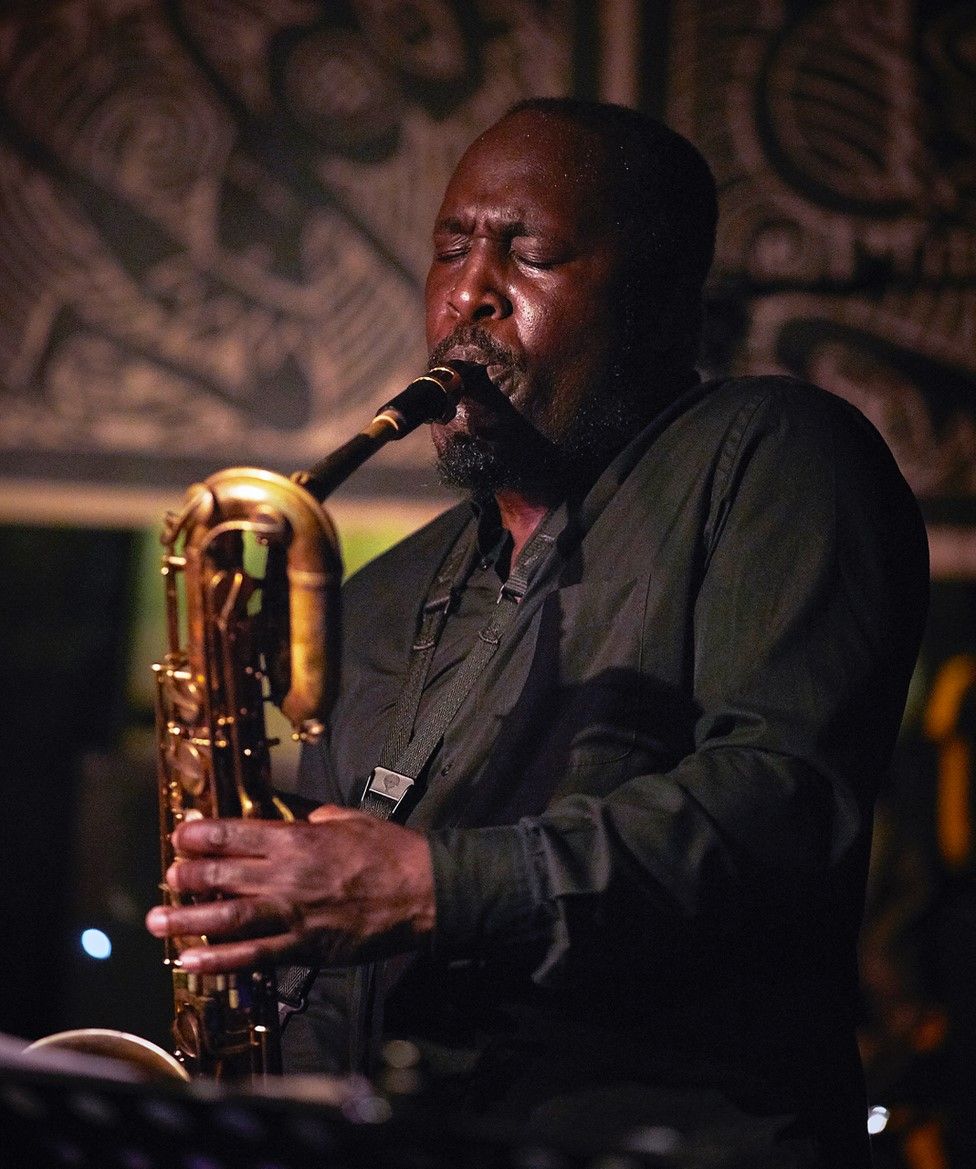
As he was glancing through an American magazine called Downbeat, reading about the lives of jazz musicians, he noticed some adverts for music colleges in the United States.
“I just really picked one and thought, ‘You know what, I’m going to write to them and try and apply,’ and that is exactly what I did,” says Tony.
He posted his application to Berklee College of Music in Boston, Massachusetts, a centre of musical excellence. To date Berklee alumni have won 311 Grammy awards.
“They auditioned me first, but they eventually took me,” says Tony, and in 1988, at the age of 24, a scared and excited Tony