



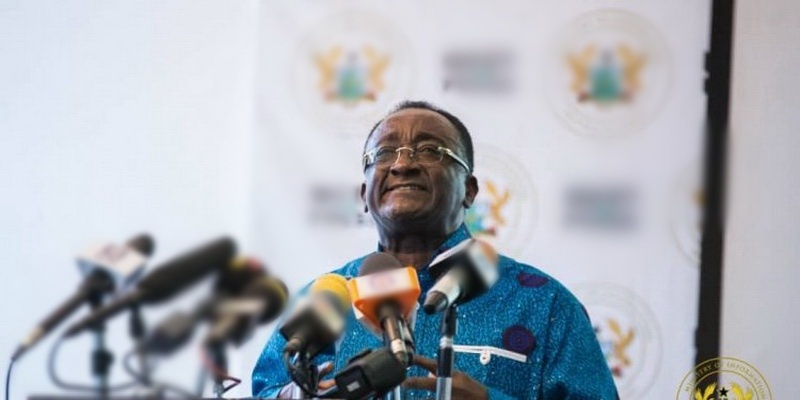
SPEECH DELIVERED BY HON. DR. OWUSU AFRIYIE AKOTO ON THE OCCASION OF THE 2021 RE: AKOTO MEMORIAL LECTURES

The Chairman of the Council of State, Nana Otuo Siribour II, Juabenhen; The Chief Justice, My Lord Kwasi Anin-Yeboah; The Former Speaker of Parliament, Professor Michael Aaron Ocquaye; The Director of the Ghana School of Law and Faculty; The Vice Chancellor, Kwame Nkrumah University of Science and Technology (KNUST) and Faculty; General Secretary and Regional Chairmen of the New Patriotic Party (NPP); Nananom; Members of the Media, Students, Ladies and Gentlemen.
The family of Baffour Osei Akoto is most grateful to the Ghana School of Law for the opportunity provided by this platform to discuss the life and works of my late father and his contribution to the development of our dear country, Ghana.
Over the past 16 years, since the inception of this all important lecture series, many high profile State officials and distinguished academics have provided stimulating lectures on this platform. The contributors include the President of the Republic His Excellency Nana Addo Dankwa Akufo Addo, Professor K. Date-Bah, Nana Dr. S.K. B Asante, the late Peter Ala Adjetey, the late Prof. A.K.P Kludze, Prof. Ebow Bondzi-Simpson, Prof. Raymond Atuguba and the current Director of Legal Education at the Ghana School of Law, Mr. Maxwell Opoku Agyemang.
Indeed, the focus of the lectures has been the case of fundamental Human Rights involving Baffour Osei Akoto and Seven others. They had been detained under the Preventive Detention Act (Act 1958), as political prisoners in the condemned cells of the Nsawam Medium Security Prison on the 11th of November, 1959. A case of Habeas Corpus was argued in the Supreme Court of Ghana by no less a figure than Dr. J. B Danquah in 1961. This case has become a cause celebre and has taken the title of the Annual Lectures organised by this distinguished legal institution.
The fact that the Law School, in this year’s commemoration chose to lift the veil and to showcase the personality behind the famous case is something that the family of Baffour Akoto is very grateful for.
This is because the man we are talking about played a major role in both the cultural and political development of Ghana we know today. He was a cultural icon of no mean reputation when it came to traditional Akan law and Chieftaincy Affairs. Indeed it can be argued that his contribution in these aspects of Ghanaian life was even more significant than the case law that has taken his name.
Today, I intend to use a broad brush to paint the outline of a picture of the enormous contribution that Baffour Osei Akoto made to the development of both the culture and politics of modern Ghana.
I will attempt to do so under three main headings – his family life, his role as a Chief at the court of three successive Asante Kings spanning nearly seven decades from 1935-2002 and last but not the least, his contribution to the development of our politics today through the leadership role he played in the mid-50s which continues to reverberate in our current political dispensation.
By doing justice to the topic chosen for the presentation this afternoon, we are reminding ourselves that a life well lived will always be remembered. It is incumbent on us, therefore, to give our utmost in the service of country and humanity.
The traits that characterised Baffour’s life and works are meant to portray to the citizenry, in particular the youth, a model of the contributions expected of them to make Ghana a better nation.
In his inaugural speech as President of Ghana on 7 January 2017, His Excellency Nana Addo Dankwa Akufo-Addo mentioned Baffour Akoto and others as legends whose efforts and sacrifices ensured the freedom of the Ghanaian state. In that speech, the President noted:
Baffour Osei Akoto and others, who taught us that fidelity to principles, courage, patience, resilience and collective action, do yield results. They fought with intelligence, guts, steely determination and patriotism to liberate our land and reclaim our worth as human beings.
Their love for country continues to inspire generations of us to commit our lives to the search for an enduring democratic legacy for Ghana
1. FAMILY ORIGINS
Baffour Osei Akoto, the cultural icon and politician, was a quintessential Ghanaian who personified patriotism. He was born on 22nd February 1904 and passed on to eternal glory on 3rd September 2002. His father, Nana Owusu Sekyere, Chief of Ankaase in the Kwabre District near Kumasi was the grandson of Asantehene Osei Asibey Bonsu (1800-1824).
His mother, Obaapanin Akosua Apeaa of Kwabre Heman, was the great granddaughter of Asantehene Osei Yaw Akoto. So he was born a true Asante Royal and named Osei Akoto. He took on the noble Asante title “Baffour” when he ascended to the Butuakwa and Appiah Kyeame stool in 1935. The stool was endowed with the title “Baffour” when it was created by Asantehene Osei Asibey Bonsu around 1810.
Baffour Osei Akoto was a strong personality imbued with leadership qualities. He was endowed with a magnetic influence that drew people of diverse backgrounds in terms of social standing, education, ethnicity, religious persuasion, etc.
Although he did not have much formal education, he deployed his indigenous knowledge and wisdom so effectively that he was able to weave together a strong team of highly educated personalities from notable professions such as the law, academia and engineering into a formidable political force to influence the direction of our politics in the 1950s (see later).
2. BAFFOUR AKOTO AS A FAMILY MAN
Two aspects of Asante traditional culture influenced the family life of Baffour Osei Akoto. These are the matrilineal system of Asante culture and the practice of chieftancy.
The matrilineal system meant that as head of the Abusua he was socially and financially responsible for all members on the maternal side of the extended family including his sisters, maternal nephews and nieces, the grandnephews and grandnieces. And there were scores of them.
Yet he took responsibility for all aspects of their wellbeing including their welfare, marriage life, education etc. Indeed in the early 1950s he personally financed a nephew and niece to sojourn in England to read law and medicine. That was how committed he was to his matrilineal family and to education.
As the occupant of the Butuakwa and Appiah Kyeame stool, he had stool wives. He also had wives outside the stool. These together produced thirty-six (36) children and yours sincerely is NUMBER EIGHTEEN (18th). He was very committed to the upbringing, education and careers of his children.
He educated his children in the best schools and was keen to ensure that they entered lucrative professions and embarked on careers that would stand them in good stead in their future lives.
This has produced a whole range of professions among my siblings – from law, accountancy, journalism, politics, writers, business to academia. His six years of incarceration under the Preventive Detention Act temporarily prevented him from carrying out his responsibility to both the extended and immediate family.
But he resumed these responsibilities when he gained his freedom after the 1966 coup d’état which overthrew the Nkrumah regime.
Apart from his commitment to his family he also assisted in nurturing the families of his friends and colleagues. He treated the children of his friends like his own and mentored many who later in life made such an enormous contribution to the development of this country.
Baffour was the Executor of the Will of his great friend Mr Kobina Annan, the father of the late Kofi Annan, former Secretary General of the United Nations. It was Baffour who paved the way for former President His Excellency Agyekum Kufuor, his stepson, to enter politics by becoming the Progress Party’s candidate for Atwuma Nwabiagya Constituency.
He replaced Mr B.F. Kusi who had won the seat in a famous by-election for the National Liberation Movement (NLM) in 1956. As a child, Otumfuor Osei Tutu II was also no stranger to our home as a neighbour in Ashanti New Town and as a classmate and friend to my siblings. These are the most famous ones. But he nurtured and mentored many others.
It should be emphasised that Baffour Osei Akoto was a true-blue Ashanti who was proud of his ancestry but he was not tribalistic. He equally cherished Ghana’s rich cultural diversity and considered it a strength for the country. He spoke perfect Kano Hausa which he learnt while plying his trade across the country as a motor mechanic in his youth.
He did not only work closely with people all over the country on the political front but also encouraged inter-ethnic marriage. He arranged for his blood sister Madam Yaa Ayiwa to marry to his friend Chief S D Dombo, a Dagau from Duori in the Upper West Region. Today, the occupant of the Duori Skin, Na Tikai Dombo, is a son of Dombo and Ayiwa and for that matter a nephew of Baffour Akoto.
3. BAFFOUR AKOTO AS A CHIEF AND SOCIALITE
Baffour was a prescient person who considered culture as the foundation of human development. He, therefore, promoted Asante culture as he occupied the prestigious office of advisor and spokesperson (Okyeame) to the Asantehene. The significance of the role of Baffour Osei Akoto and hence his legacy in chieftaincy affairs can only be appreciated in the context of the history of Asante in Ghana and West Africa.
Asante history offers examples of heroes and heroines who made immolations for the sustenance of the Asante nation, and those examples were a guiding light for Baffour. He was, therefore, prepared to pursue at length fairness, equity and justice.
Even when he was offered he opportunity of release from prison in exchange for abandoning his political beliefs, he chose to remain incarcerated because his freedom would be on the condition that he could no longer defend the defenceless.
We may view the contributions of Baffour by looking at Ashanti history in two broad phases. The first phase was the period from the formation of the nation by King Osei Tutu and his friend the legendary Okomfo Anokye in the 17th century to the beginning of the 20th century (1900). The sovereignty of the Asante Kingdom ended following the defeat of Asante by the British in the Yaa Asantewaa War of 1900.
The Asantehene Otumfuo Agyemang Prempeh I was exiled to Seychelles Island in the Indian Ocean where he was kept by the British from 1896 – 1924. The second phase of Ashanti history begun with the reign of Otumfuo Osei Agyemang Prempeh II (Asantehene: 1935 – 1970) who succeeded Prempeh I. The latter, upon his return from exile in 1925 remained as Kumasihene until he went to the village in 1931.
It was during the reign of Otumfuo Prempeh II (Kumasihene: 1931 –1935/Asantehene: 1935 – 1970) under whom the Ashanti Confederacy was restored in 1935, that the office of the Asantehene was reinstated. That period marked the beginning of the second phase of Asante history.
It is worthy of note that Baffour Akoto was enstooled as Okyeame at the time of the restoration of Asanteman and Otumfuor Prempeh II indeed started his reign with Baffour. Okyeame Akoto, as he was popularly known, served all the Asante kings, including the current occupant of the Golden Stool, Otumfuor Osei Tutu II.
It should be placed on record that the office of the Okyeame is not only about being the spokesperson of the King. The Okyeame, in fact, is the closest officer and advisor to the King. He may even enter the King’s bedroom withou